
Racines & HéritageLet’s discuss the project

Proposal to the Government of QuébecHomelessness and heritage

Racines &
Héritage

A place to find stability.
A future to rebuild.

Use available church buildings to welcome people experiencing homelessness, then transform these spaces into community centres that combine affordable housing with support towards lasting stability.

The project at a glance PDF · 2 pages: the visual overview, then the proposal · FrenchExplore the illustrated journey

A place rooted in its past. A renewed purpose.

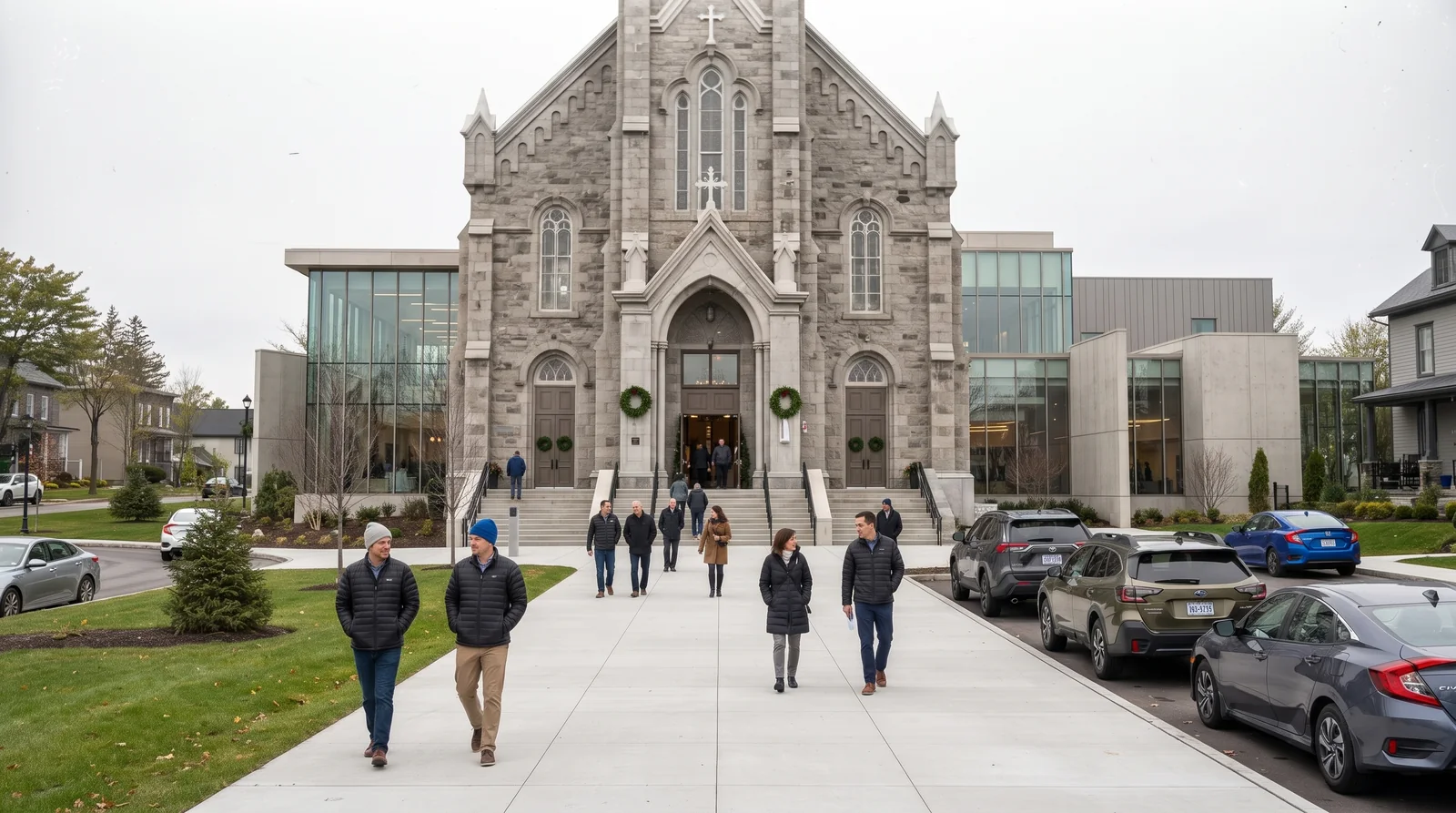
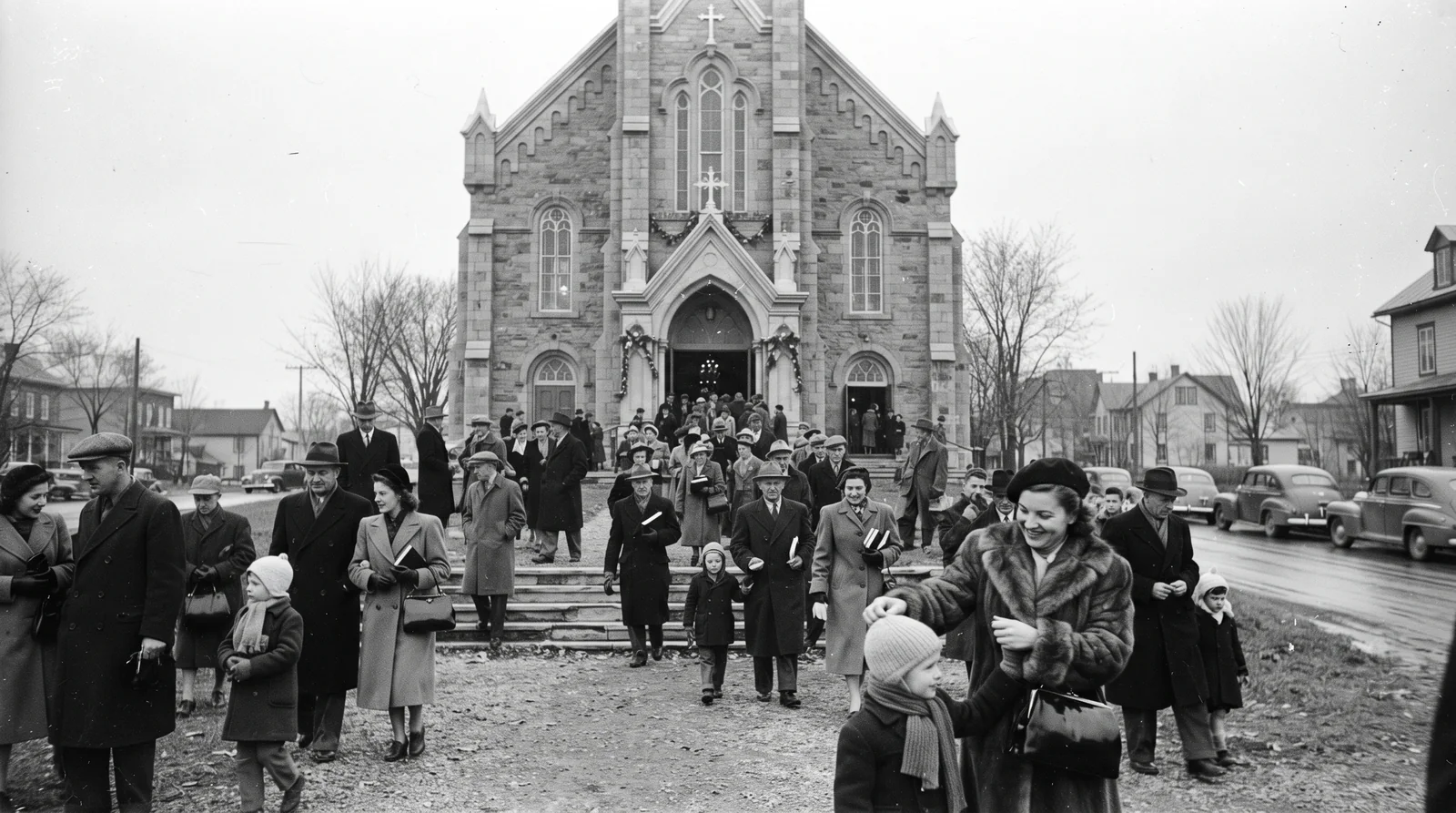
Illustration of the same site transformed into a community centre, surrounded by housing and people.Illustration of a Québec church and its forecourt in a historic setting.The heritageThe vision
One place, a renewed purpose of mutual support. Concept illustrations: they do not depict a secured site or an operating centre.

The project in pictures

A shared welcome. Individual paths forward.

Three people, different needs. This illustration outlines the proposed welcome and support options, guided by each person’s choices and circumstances.

Five concept scenes follow the same three people: a winter welcome, clothing and hygiene, a meal, a meeting with a support worker, then housing, work or helping others.
  1. A roof, a blanket and a caring presence offer a place to rest.

  2. Access to a shower and clean clothing, with respect for privacy.

  3. Eat well, regain strength and connect with others around a table.

  4. Talk with a support worker about your needs and wishes, with a referral to specialized services when needed.

  5. Depending on your circumstances, work towards housing, training or employment—and, if you wish, find ways to help others.

Fictional journeys illustrating proposed services. The steps adapt to each person, with no guaranteed outcome or fixed timeline. Emergency help would remain available without choosing further support.

The starting point

Heritage that serves people

Racines & Héritage proposes to renew the tradition of mutual support at the heart of Québec’s churches. Rooted in their neighbourhoods, these buildings could become welcoming places where people can find support close to home, while preserving their heritage and spiritual purpose. The project’s Christian inspiration finds expression in dignity, solidarity and care for every person.

A gradual rollout

Providing shelter while transforming spaces

  1. Bring the spaces into use

    Reach agreements with dioceses and property owners to lease, transfer or acquire buildings. Select sites that meet local needs and where the conditions for welcoming people can be put in place.

  2. Open temporary shelter

    Set up temporary shelters in available buildings, offering accommodation, meals and local support while longer-term solutions are prepared.

  3. Transform sites and support each transition

    Transform one site while the others continue to provide temporary shelter. As each centre opens, help people move into housing and connect with resources better suited to their needs, then begin work on the next site. This approach would maintain continuity of shelter and support.

Proposed approach: the number of sites, their capacity and the timeline will be determined after assessment. Opening will depend on agreements, the necessary adaptations and applicable approvals.

Close to people’s needs

Shelter, meals and human connection

Meet immediate needs

Temporary shelter, showers, clothing, food assistance, collective kitchens and community meals, in coordination with food banks and neighbourhood resources. Emergency help would remain available whether or not a person chooses further support.

Support each person’s journey

Work with each person to understand their needs, priorities and the support they wish to receive. Rebuild trust without judgment, helping each person regain a sense of belonging and consider their next steps. Offer listening, psychosocial and spiritual support, guidance and ongoing local support. Arrange referrals to specialized health and social services when needed.

Support lasting stability

Offer voluntary, tailored pathways towards affordable housing, renewed social connections, training or a return to work. People who wish to do so could also find ways to help others. Each journey follows its own pace; progress is neither linear nor guaranteed.

A collaboration serving people

Academia and science serving people on the streets

Institut canadien pour l’épanouissement humain

Racines & Héritage collaborates with the Institut canadien pour l’épanouissement humain (IHF). A shared mission: connect research with realities on the ground to inform support, training and pathways towards autonomy and inclusion.

This collaboration aims to bring together knowledge from several disciplines to develop training content and methods adapted to the people welcomed. This work also seeks to inform the support offered and how its effects are assessed, alongside participants and local teams.

Discover IHF

Rebuilding neighbourhood life

Centres open to the whole community

The homelessness initiative forms part of the nine purposes of Racines & Héritage: a Christian place of worship, community centre, youth centre, women’s centre, daycare, business centre, housing and condominiums, reception halls and health clinic. This neighbourhood life aims to rebuild connections and prevent isolation.

Rooting the project in its community

Alongside the collaboration with IHF, coordinate shelter and specialist referrals with organizations already serving local communities. Engage food banks and explore collaboration with Moissonneurs Solidaires on food supply, as well as with Défi Jeunesse Québec on tailored support pathways. Agreements with these other organizations remain to be arranged.

Building a model that lasts

Combine the public support needed for launch and ongoing assistance with anticipated revenues: rental housing, professional spaces, reception halls and condominium sales. Separate acquisition and construction costs from recurring staffing and service expenses. Prepare a prudent budget for each site, including a contingency reserve; anticipated revenues are not secured funding.

A framework for lasting support

Anticipate difficulties. Protect continuity.

Every opening must be backed by supported teams, coordinated services and sustainable resources. Racines & Héritage proposes a phased rollout, with clear responsibilities and backup arrangements to protect people and maintain continuity of support.

Measures to formalize before opening: responsibilities, resources and thresholds for intervention will be agreed with partners. Their implementation will be a condition of launch and of any subsequent increase in capacity.

Capacity matched to actual resources

The risk to anticipate
Opening too quickly, exceeding capacity or welcoming people whose needs exceed the team’s resources. A supply disruption or health crisis can also interrupt support.
The planned response
Assess the building, accessibility, safety and staffing before opening. Set a clear capacity and arrange specialist referrals for needs beyond the site’s resources. Agree emergency procedures and backup arrangements with partners for meals, hygiene and access to care, with named people responsible.
The proposed follow-up
Available places, unmet requests, referrals and incidents; service interruptions and time to restore services.

Trained and supported teams

The risk to anticipate
Burnout, staff turnover and improvised responses to complex situations.
The planned response
Plan for qualified support workers, regular supervision and relevant training in de-escalation, trauma, mental health and substance use. Define volunteers’ roles and a way to raise concerns when staffing is insufficient.
The proposed follow-up
Shift coverage, team stability, access to supervision and training needs.

Accountable governance

The risk to anticipate
Unclear responsibilities, concentrated decision-making or difficulties that are not escalated in time.
The planned response
Define the board’s and management’s responsibilities, separate spending authorization from financial oversight and disclose conflicts of interest. Provide for regular financial reporting and a confidential complaints process for both the people welcomed and staff.
The proposed follow-up
Budget monitoring, complaints handling, documented decisions and review of corrective measures.

A neighbourhood involved from the start

The risk to anticipate
Tensions over shared spaces, a sense of insecurity or a centre isolated from its neighbourhood.
The planned response
Bring residents, businesses, people welcomed at the centre and local services together in a liaison committee. Designate a contact person, organize mediation and agree on the presence of teams around the site and how concerns will be handled.
The proposed follow-up
Liaison meetings, response times and follow-up on recurring situations.

A planned transition towards housing

The risk to anticipate
Seasonal closures, construction work or departure without an alternative that sends someone back to the street.
The planned response
Prepare each transition with the person and a designated support worker. Maintain shelter services during construction through phased work across sites; establish referral agreements and organize follow-up towards housing or an appropriate resource.
The proposed follow-up
Completed transitions, continuity of support and housing stability when the person agrees to this follow-up.

Funding that supports continuity

The risk to anticipate
Funding beds or construction without the necessary services, or relying on revenues that remain hypothetical.
The planned response
Confirm operating resources before opening, distinguish one-time funding from recurring resources and prepare a fallback plan. Adjust the pace of rollout to confirmed resources and observed results.
The proposed follow-up
Budget variances, available funding, service costs and feedback from the people supported.

Rooting the project in its community

Working with community organizations

Racines & Héritage collaborates with IHF and seeks to bring together organizations already supporting people experiencing homelessness in Montréal, Québec City, Trois-Rivières and elsewhere in Québec. Other collaborations would be shaped by local needs.

The collaboration with IHF is confirmed. The other organizations are existing resources with which a dialogue could be opened; their inclusion here does not constitute a partnership agreement or endorsement of the project.

Moving forward

A working meeting. Concrete decisions.

Bring together the Government of Québec, property owners, municipalities and community organizations to identify the first sites to assess, clarify responsibilities and cost out shelter, support and construction work. Agree together on a timetable and the conditions for launch.

The immediate goal: a working meeting to turn this vision into achievable commitments.

Propose a meeting
References and inspiration

Moissonneurs Solidaires and Défi Jeunesse Québec inspire approaches to mutual support and services; no partnership is announced with them. IHF is a collaborator of Racines & Héritage.